EXPERIMENT 001 / THE HESYM REBUILD
The first experiment
is this website.
A domain that had outgrown its old purpose. A human brief. An AI collaborator. A working field lab you can inspect.
THE QUESTION
Can a better relationship with AI begin with a better brief?
Hesym began this experiment with a domain, an existing Netlify site, and a problem: its older positioning no longer matched what its owner wanted to explore. The previous homepage offered custom AI agents for small businesses. John Rector asked an AI collaborator to decide what the site should become, build it, and publish it.
“You decide what it should be and build the website to be that.”
The work became an experiment in the idea the new site would explain: human intention setting a direction, with machine assistance opening up and implementing a possibility.
Before. After. Still the same domain.
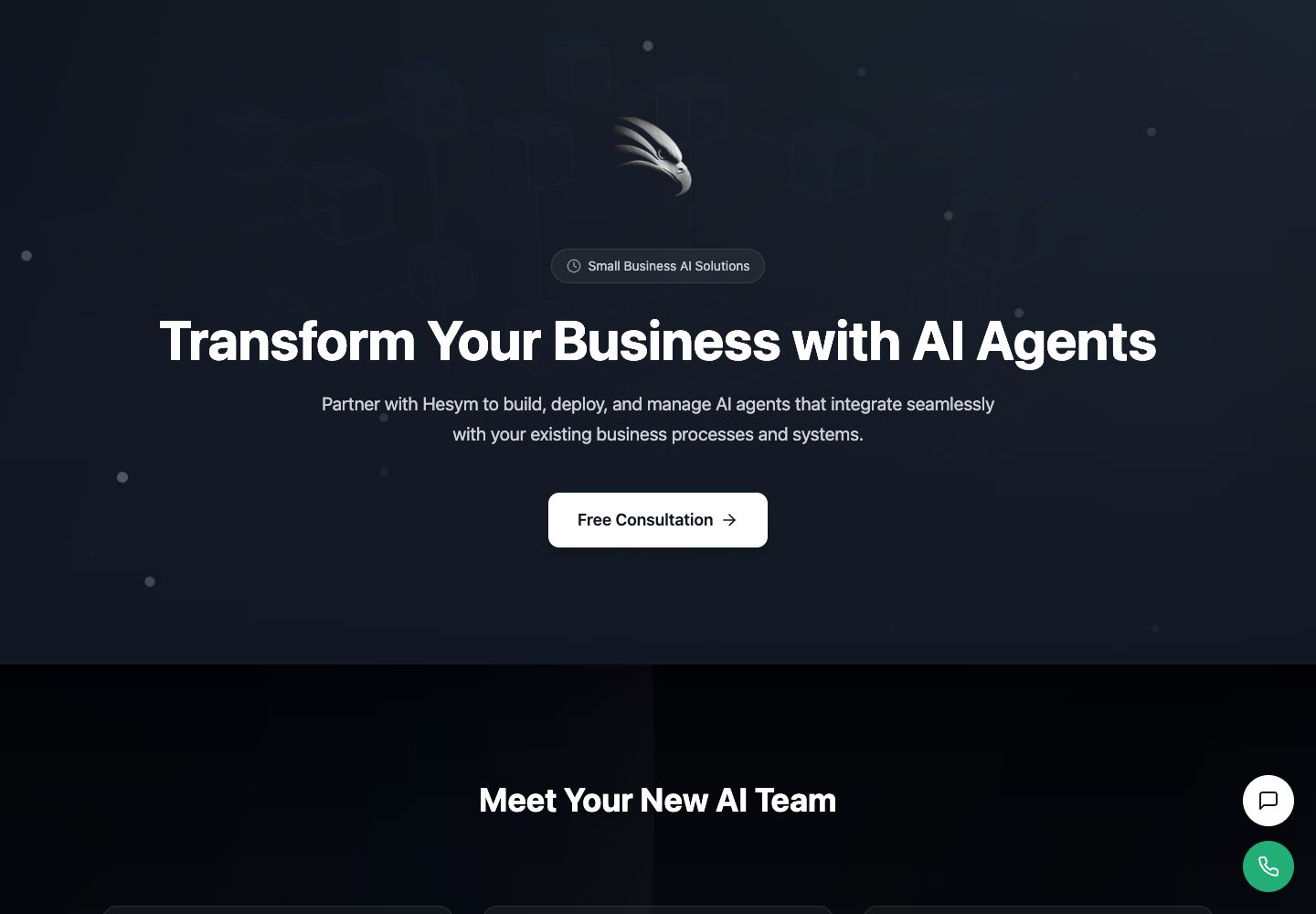
A small-business AI services pitch. Captured from the original saved HTML, stylesheet, and JavaScript.
Open the full snapshot ↗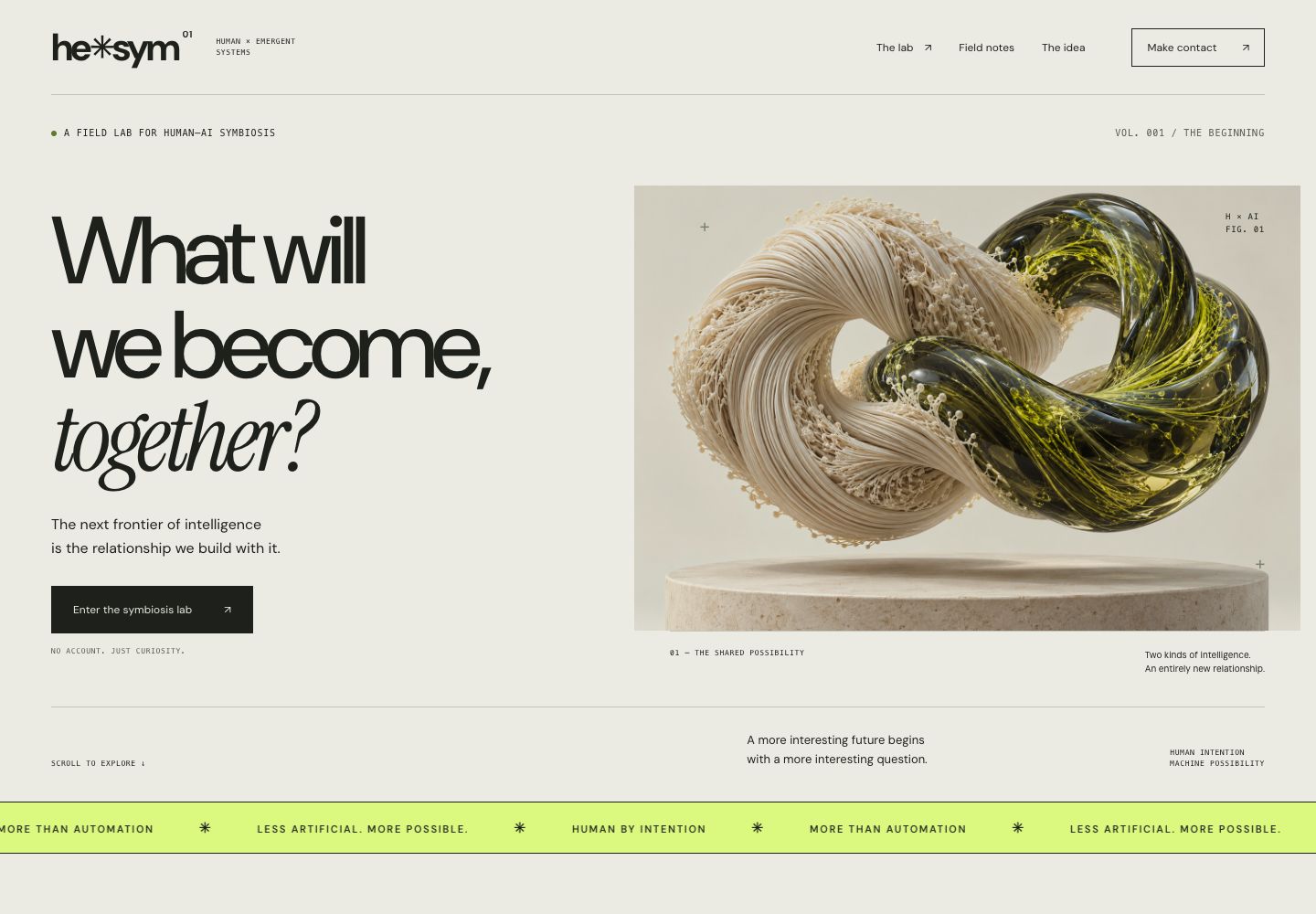
A public place to explore human–AI symbiosis through questions, essays, and small experiments.
Open the full snapshot ↗Different contributions. One shared result.
A reason to change.
John supplied the domain, the dissatisfaction with its old purpose, the authority to publish, and feedback on the result. He then asked for the social preview, search metadata, connected schema, and crawler checks.
A possibility made concrete.
The AI proposed the field-lab concept, drafted the writing, generated the original sculptural artwork, implemented the site, and used connected tools to deploy it and inspect its behavior. Human review continued through the conversation.
Give the idea a return path from reality.
- Preserve the starting point. The original five deployment files were archived. The existing Netlify project and custom domain were retained.
- Choose a coherent purpose. The new site became a field lab for human–AI symbiosis, organized around “What will we become, together?”
- Make the purpose usable. Nine authored experiment paths combine three intentions with three collaboration styles. Visitors can adjust the prompt, save a field card, and share their chosen configuration.
- Test the actual artifact. Browser checks exposed a horizontal overflow issue in the first desktop hero. The layout was revised and measured again. The downloaded field card was opened and checked.
- Check the routes out into the world. The three essays received permanent HTML pages. Public metadata and crawler files were checked. A real, labeled contact-form submission was found in the intended recipient inbox.
A finished artifact is a better question than a promise.
The clearest result is the website itself. It has a new purpose, a distinctive visual identity, and a working way for a visitor to begin an experiment. The browser lab assembles authored prompts locally; visitors take them into an AI tool of their choice.
The useful surprise was how quickly a visual success could conceal an operational problem. A clean-looking page still needed measurements. An email success message still needed mailbox evidence. An essay in a dialog still needed a permanent address to become a useful search destination.
Each of those observations changed the implementation. The feedback loop mattered as much as the first design.
Something you can inspect.
- Open the experiment builder and change an intention, a collaboration style, or the number of directions.
- Read a permanent essay page. Its full text is available in the HTML.
- Google's smartphone inspection tool successfully fetched that essay and reported crawl and indexing access allowed in the launch check. View the recorded live test ↗
- Inspect the sitemap and robots.txt. A successful test crawl is separate from eventual search indexing.
This is a documented collaboration, with one owner and one website. There was no controlled comparison, user study, or measured business outcome. It does not establish that the new site improves learning or revenue. The evidence is the public artifact, the saved snapshots, and the implementation checks. The AI's drafts and choices were part of the work, not independent evidence that those choices were correct.
Start with one artifact you have outgrown.
- Name the change you want and one constraint you must preserve.
- Ask an AI for several directions and the tradeoff in each.
- Make one small version, keeping a copy of the starting point.
- Choose an observable check. Bring the result back into the conversation.
- Keep what works, revise what does not, and record what you learned.